
Don’t You, Forget About Me
Don’t you, forget about … the times when human connection was uninterrupted by tech

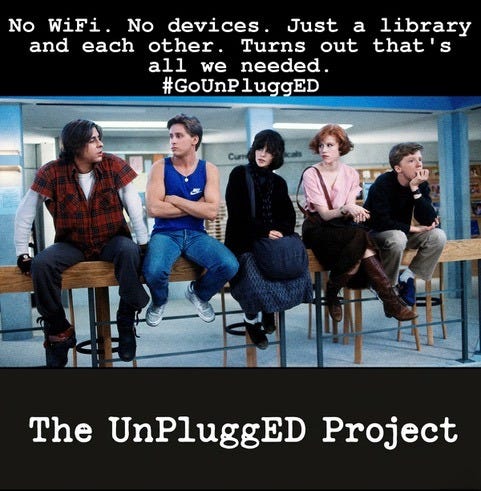
Imagine with me for a minute if on March 24th, 1984... a brain, an athlete, a basket case, a princess and a criminal, showed up for their Saturday detention at Shermer High School with an iPhone, AirPods and a chrome book. The iconic GenXer classic film that was built solely upon dialogue between the characters would never have been made.
Filmed today, it would look more like a silent movie, no conversation. Ninety-seven minutes of 5 mostly strangers, sitting at separate tables, looking at their phones and laptops, listening to their own music and attending only to the screens in front of them. Most likely, they would be doing everything they could not to look at each other. Staying uncomfortable with the uncomfortable and not talking with someone they don’t know.
But 42 years ago, we didn’t have access to the world in the palm of our hands. Rather than focusing on a screen, we tended to focus on each other. As a result, the Breakfast Club discovered that the preconceptions they had about each other were wrong. In fact, they realized they had more in common with each other than not. They were able to change their perspectives, all through the art of conversation.
This isn’t just about an old movie made in the 80’s. This is about a generation that is losing the ability to engage in conversations. A generation that feels uncomfortable talking with someone they “don’t know” so they divert their eyes and hide behind their device. Democracy dies when conversations die.
Society often talks about the harmful content children “see” on line, but what is equally, if not more important, is what they don’t “see” in the world around them.
For babies, screens used by parents and caregivers disrupt opportunities for joint attention, which lays the foundation for later complex social and communication skills, all of which conversation skills are built upon. Our eyes are at the center of this human connection, vital for babies to develop bonds and form relationships.
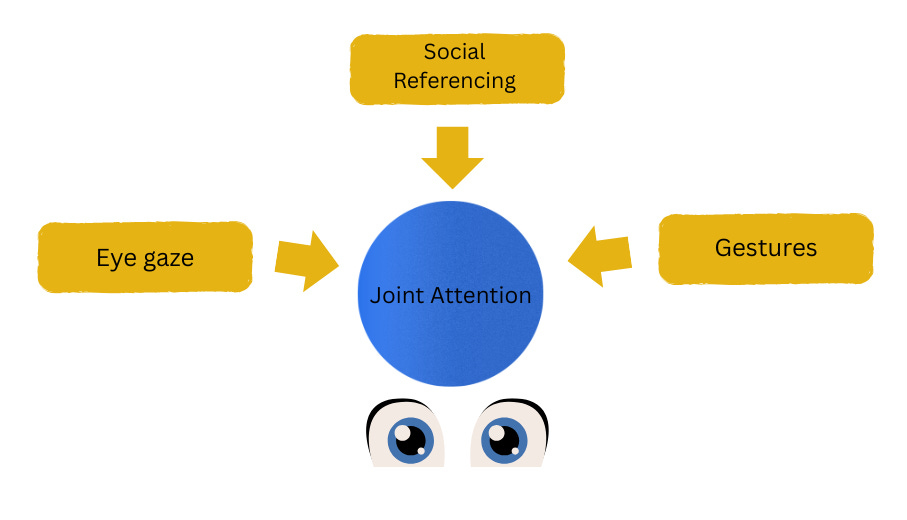
Watch what happens in this video when a fathers eyes are focused on his phone rather than his child. The unintended consequence, missed opportunities to bond and foster connection. The unintended message, “my phone is more important than you”. These seemingly little moments add up, especially over a lifetime.
When young children are using screens, it disrupts their ability to use their eyes to attend socially to others around them. Our ability to interact and socialize needs to be nurtured and fostered, just like any other skill we expect kids to learn.
Children learn about others by being with and interacting with others, using their eyes and all of their other senses. Turn taking, negotiating, eye contact, perspective taking, tone of voice etc… Kids need an infinite number of opportunities to practice and develop these skills in the real world, free from screens.
Social attention is the bedrock for strong relationships skills and mental health. One meta-analysis of research found that “people with stronger social relationships had a 50% increased likelihood of survival than those with weaker social relationships.” We are humans after all, social beings that are fueled by our relationships with each other.
It all starts with our eyes.

Screens are creating a barrier at the base layer, blocking our eyes to notice, engage and learn from others. With a weak foundation, everything else will crumble.
The real “digital divide” is when a screen prevents us from attending and observing our world and the people that fill it.
The true “social dilemma” is when screens impede the ability of children to learn how to be social. Our children are not “digital natives” as the tech industry would like us to believe, they are social humans and we must not forget that.
The Attention Economy, as described by the Center for Humane Technology, describes how social media companies “analyze our actions and the data we share, using what they learn about us to trick us into paying attention to them more than we want.” The consequence, our eyes diverted to the online world rather than each other denying us the real in person connections we need.
A powerful industry has been built on stealing our attention. It has infiltrated all aspects of our lives and at younger and younger ages. This is precisely by its persuasive design.
Fortunately this week there has been a watershed moment in the battle for our attention.
The lawsuit against Meta and YouTube opened the curtains and revealed thousands of pages of discoveries highlighting the insidious nature of the tech industries profit driven motives, their knowledge regarding the harms their products created and their unwillingness to fix it. The verdict is in and humanity is winning.
It’s time to look up.

“Do the best you can until you know better. Then when you know better, do better.” ~Maya Angelou
The tides are turning and it is not too late. It’s time to create a world where kids can explore, learn and interact with those around them. Start with a screen free week and watch what happens. Put your phone away. Turn your notifications off. We don’t have to answer every text or email as soon as they come. Tech giants like Meta and Google shouldn’t profit off our attention, our kids should.
Start at the foundation and build a stronger future. First step, lift your eyes up.
"The Breakfast Club" reference put a smile on my face. Truly considering the costs of kids and parents staring at their phones rather than being engaged with one another or otherwise the real world took the smile off my face. I'm hopeful parents can realize how much of their kids' childhoods are being stolen by screens we are told are the "new norm." As you say, the social media trials lay this bare. Let's give our kids the childhood and adolescence they need.